Four books built for the practitioner who is already inside AI systems — not the analyst watching from outside. No theory. No hype. Operator-grade from page one.
Not four separate products. A unified reading arc engineered to build operator-grade AI competency from first principles through full supervisory capability. Click any cover to see the full Table of Contents.
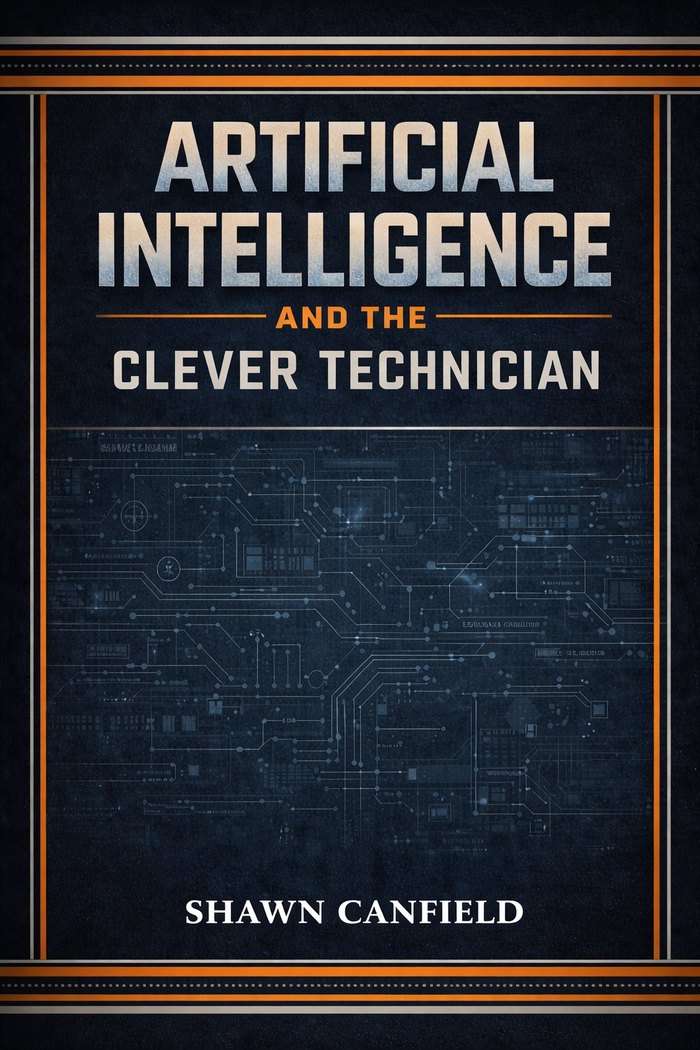
AI sounds fluent. It does not understand. This book gives the working technician the conceptual framework to tell the difference — and act on it. Covers synthetic fluency, the technician's advantage, recognizing confident nonsense, real workflow integration, constraint design, failure pattern recognition, and why responsibility cannot be outsourced to a machine.
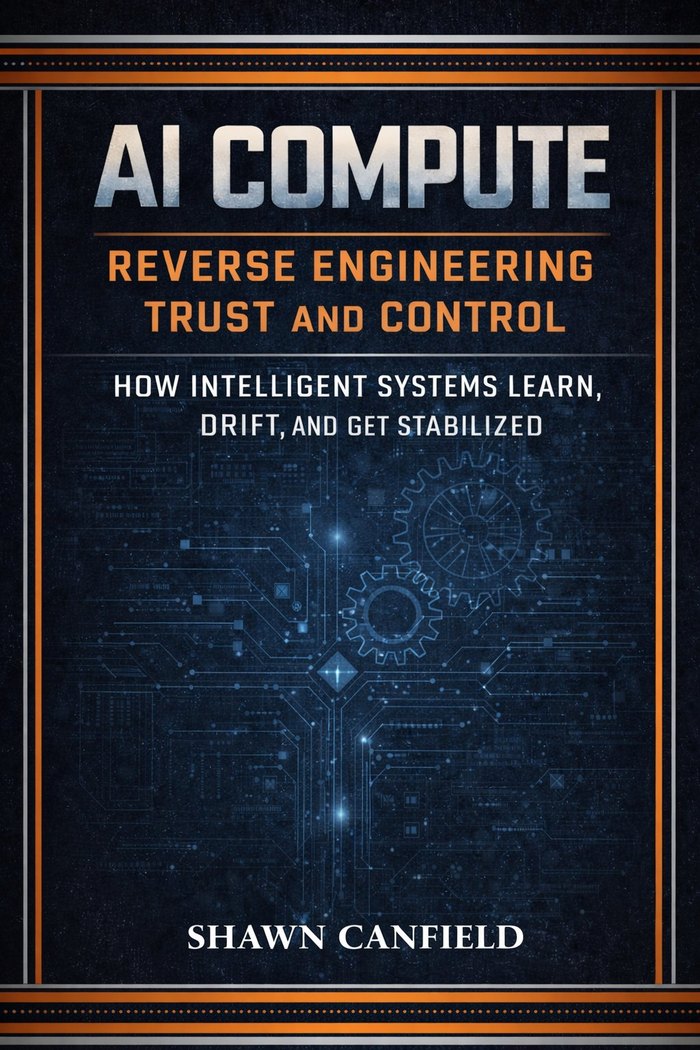
Trust in AI is not a feeling — it is an architecture. This book reverse-engineers how intelligent systems behave operationally: control layers, behavioral boundaries, drift detection signals, stabilization mechanisms, verification before delegation, and the Operator's Control Doctrine. Feature knowledge is not control competence. This book closes the gap.
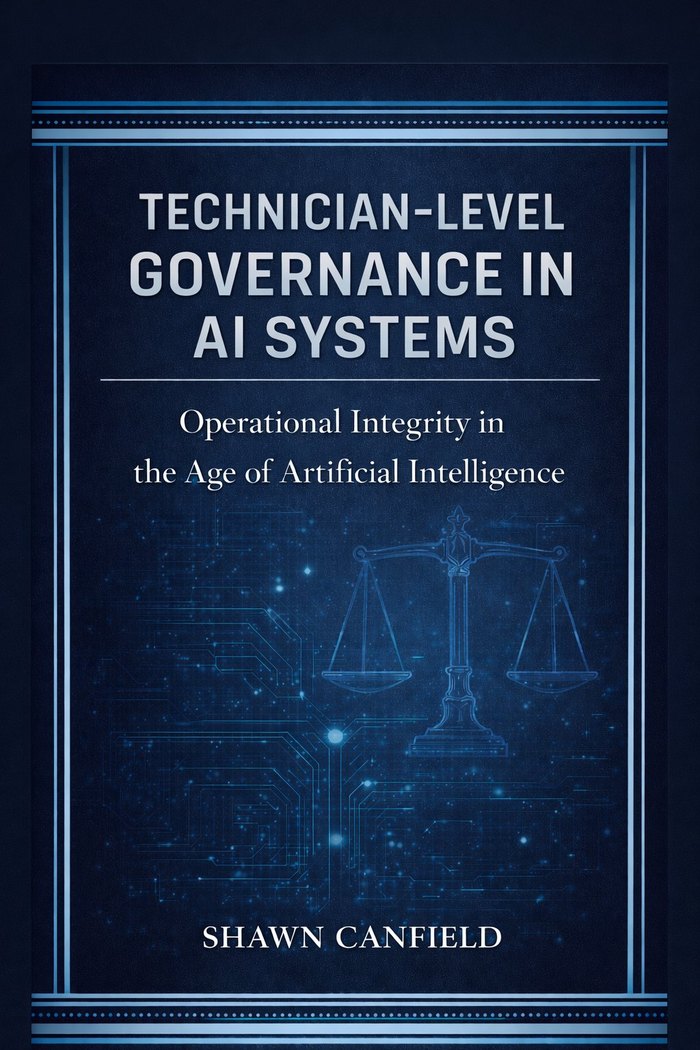
Governance is not a policy document. It is a set of decisions made daily under pressure by people closest to the systems. This book puts governance tools in technician hands: containment before diagnosis, monitoring the boundaries that matter, governance entropy, layered control architecture, failure modeling, and governance margin and system stability.
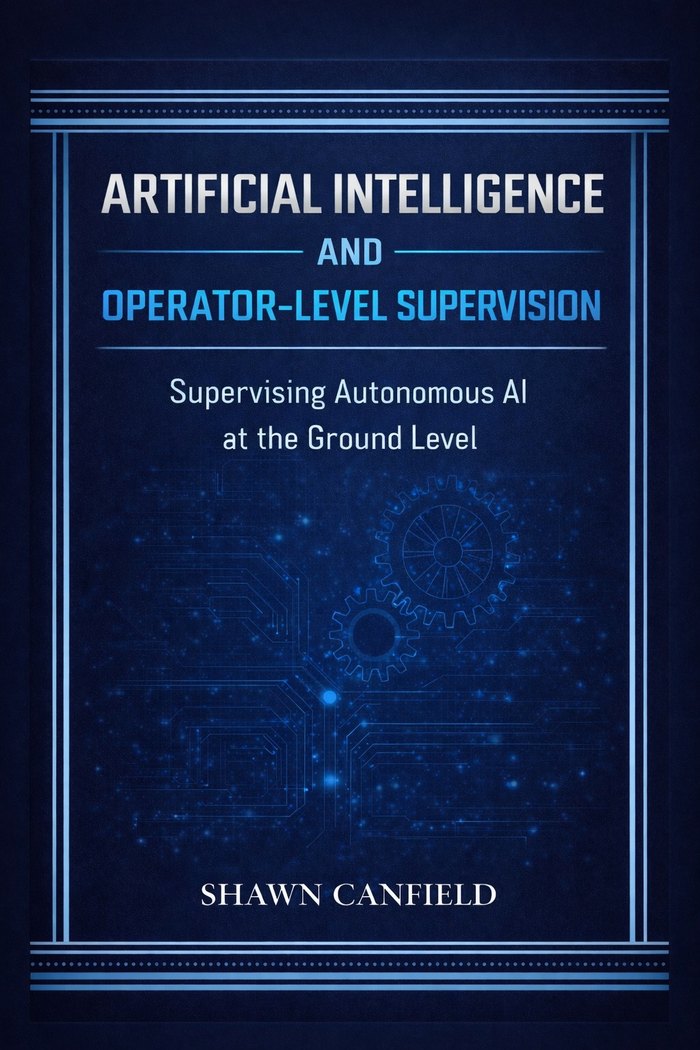
AI systems appear stable right up until the first deviation no one sees. This is the capstone volume — the operator's manual for live AI environments. Covers hidden state changes, drift that becomes policy, delayed detection, the cost of hesitation, intervention timing, escalation thresholds, containing failure without stopping the system, and the hard limits of control.
Machines produce confident output. That confidence is not comprehension. The gap between fluency and understanding is where errors enter, drift accelerates, and accountability disappears. Book One maps this terrain.
Knowing how to use AI tools is not the same as knowing how to supervise AI systems. Trust is an architecture, not a feeling. Book Two reverse-engineers how intelligent systems learn, drift, and get stabilized.
When the system drifts, hesitation has a cost. When governance fails, it fails silently. When the operator is the last line of defense, preparation is not optional. Books Three and Four close the loop.
Book One establishes what AI actually does versus what it appears to do. Synthetic fluency, simulation vs intelligence, the technician's advantage, constraint design, verification architecture, and why the technician is the ethical firewall — not the last resort.
Book Two maps the control layer — behavioral boundaries, drift detection signals, stabilization mechanisms, alignment vs control, and the Operator's Control Doctrine. You cannot supervise what you cannot trace. Reliability before scale.
Book Three puts governance in technician hands. Containment before diagnosis, governance entropy, layered control architecture, decision compression and structural blind zones, governance margin and system stability. Not policy. Operating discipline.
Book Four is the capstone — the operator's manual for live AI environments. The first deviation no one sees. Drift that becomes policy. Delayed detection. The cost of hesitation. When to override the machine. The hard limits of control.
Available now on Amazon. Begin with Artificial Intelligence and the Clever Technician and build through the complete stack — or enter at the volume that matches your current position.